Sintered Stone Dining Table Manufacturers | New Marble Material Redefining Modern Living
In the ever-evolving landscape of interior design and furniture manufacturing, materials dictate not only the aesthetic appeal of a space but also its longevity and functionality. In recent years, one material has emerged as a true game-changer in the industry: sintered stone. As we look toward the future of modern living, understanding this innovative surface is essential for wholesalers, designers, and homeowners alike.
What is Sintered Stone?
Sintered stone, often referred to by its English translation “sintered stone,” is a revolutionary, high-performance surface material. Despite its name, it is not a natural stone but rather an advanced engineered porcelain slab. It is created through a highly sophisticated manufacturing process called sinterization. Natural raw materials—such as granite minerals, natural clays, silica, feldspar, and mineral oxides—are blended, pressed under immense pressure (often exceeding 15,000 tons), and then fired in a kiln at extreme temperatures ranging from 1200°C to 1500°C. This process mimics the natural metamorphic formation of stone that takes thousands of years, compressing it into mere hours. The result is a 100% natural, highly compacted, and non-porous slab that contains no resins, binders, or toxic chemicals.
Sintered stone, often referred to by its English translation “sintered stone,” is a revolutionary, high-performance surface material. Despite its name, it is not a natural stone but rather an advanced engineered porcelain slab. It is created through a highly sophisticated manufacturing process called sinterization. Natural raw materials—such as granite minerals, natural clays, silica, feldspar, and mineral oxides—are blended, pressed under immense pressure (often exceeding 15,000 tons), and then fired in a kiln at extreme temperatures ranging from 1200°C to 1500°C. This process mimics the natural metamorphic formation of stone that takes thousands of years, compressing it into mere hours. The result is a 100% natural, highly compacted, and non-porous slab that contains no resins, binders, or toxic chemicals.
Sintered Stone vs. Real Marble: Superior Advantages and Replacement Potential
For centuries, real marble has been the gold standard for luxury interiors. However, it comes with significant drawbacks: it is highly porous, prone to staining, susceptible to etching from acidic substances, and requires regular sealing. Sintered stone completely eliminates these vulnerabilities.
For centuries, real marble has been the gold standard for luxury interiors. However, it comes with significant drawbacks: it is highly porous, prone to staining, susceptible to etching from acidic substances, and requires regular sealing. Sintered stone completely eliminates these vulnerabilities.
The advantages of sintered stone over real marble are profound. First, its ultra-low porosity (often as low as 0.02%) makes it virtually stain-proof and completely impervious to water and liquids. Second, it boasts exceptional durability, achieving a Mohs hardness of 6 to 7, making it highly resistant to scratches, impacts, and daily wear. Third, it is A1 fireproof and can withstand extreme heat without discoloring or emitting toxic fumes. Finally, unlike marble, sintered stone requires zero maintenance, no sealing, and can be cleaned easily with standard household cleaners.
Given these superior characteristics, sintered stone is not just a potential replacement for real marble; it is already actively surpassing it. While it may not entirely replace marble in ultra-high-end historical restorations where natural uniqueness is paramount, for everyday luxury, commercial spaces, and modern residential applications, sintered stone offers a more practical, durable, and eco-friendly alternative that perfectly replicates the stunning visual aesthetics of natural stone.
The Rising Trend of Sintered Stone Furniture: A Highlight at CIFF Shanghai 2026
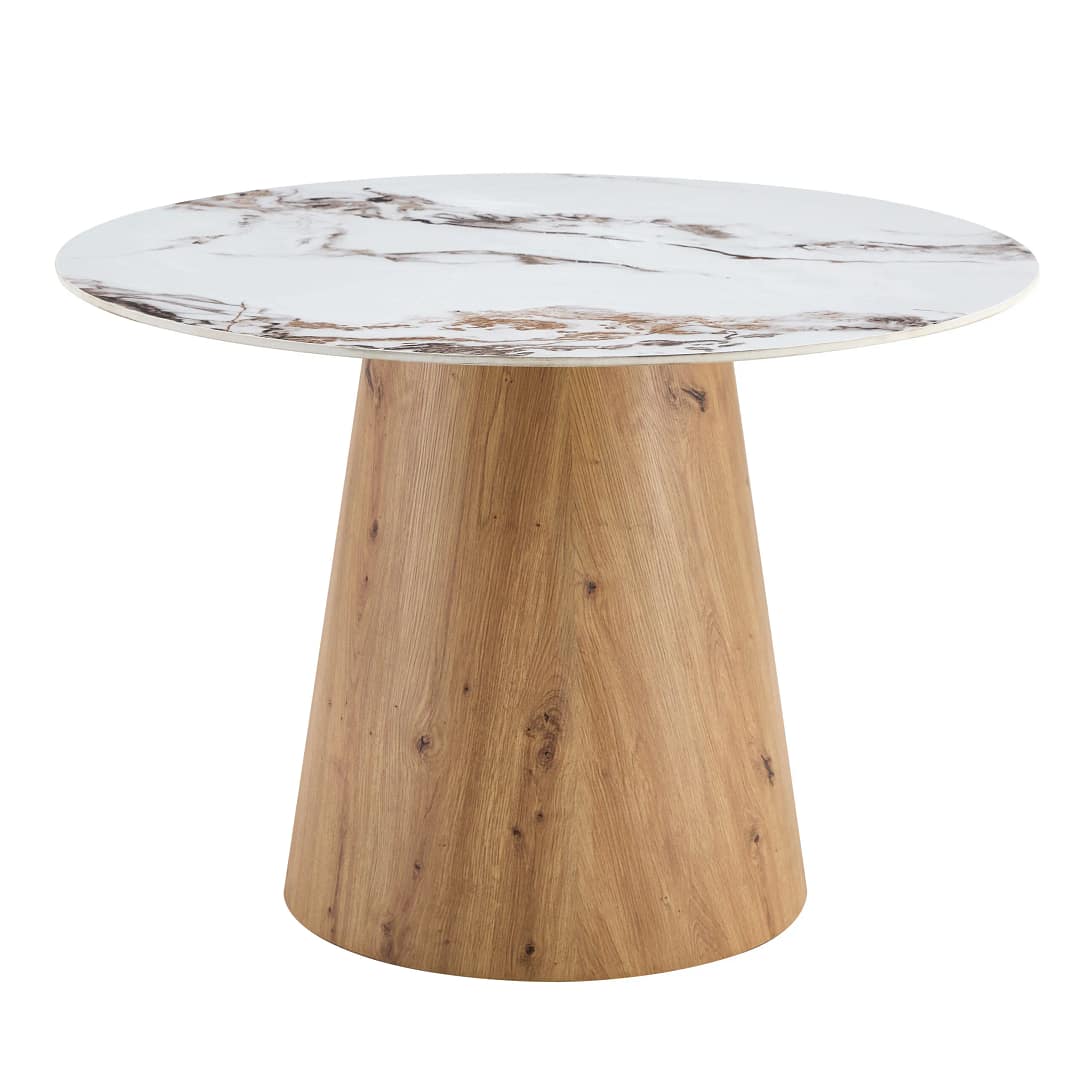
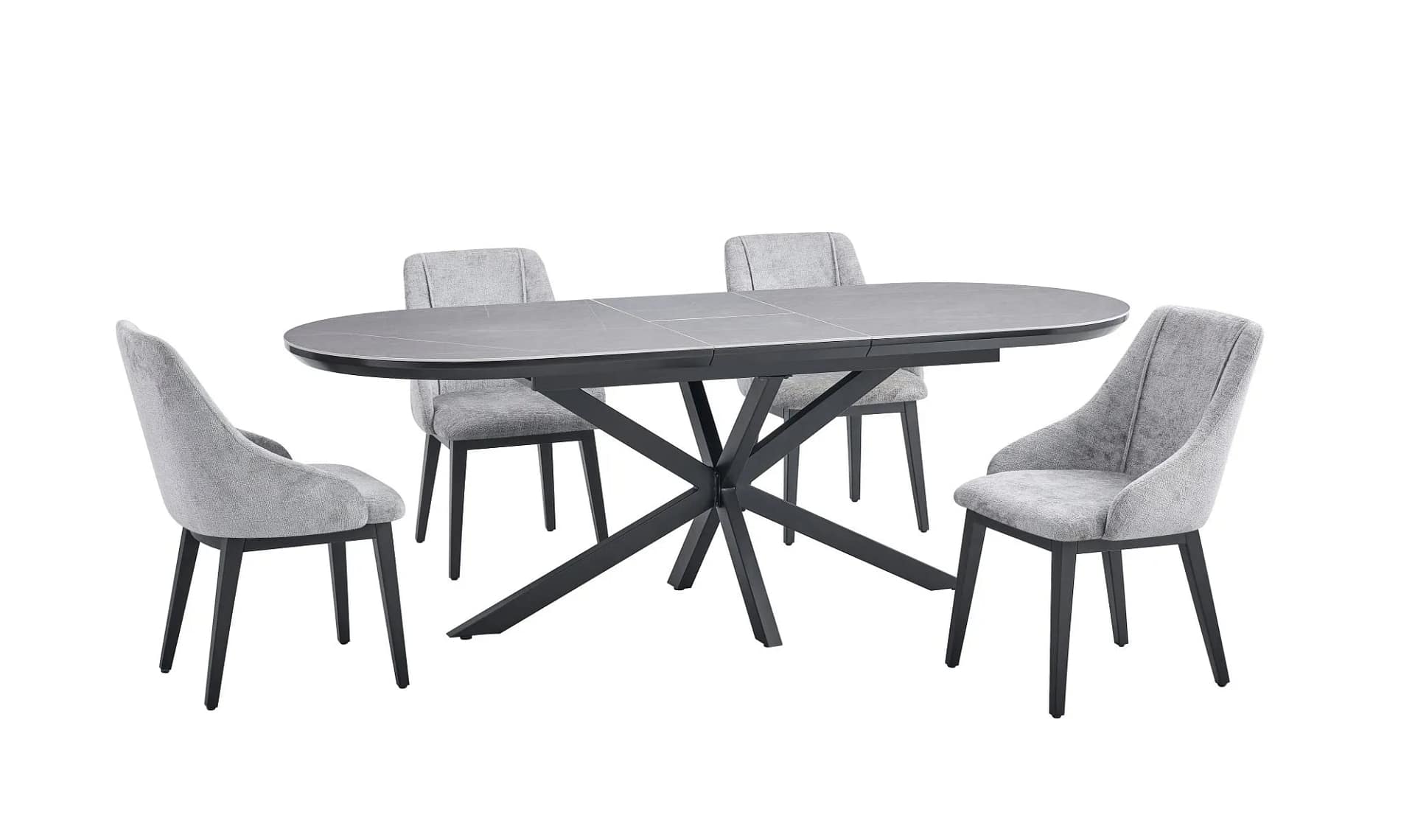
The versatility of sintered stone has catalyzed a massive trend in furniture manufacturing. Today, it is increasingly being used for dining table tops, coffee tables, TV stands, and custom cabinetry. This trend is driven by consumers’ desire for minimalist, seamless designs with large-format slabs that reduce visible joints, creating a sleek and expansive visual effect.
The versatility of sintered stone has catalyzed a massive trend in furniture manufacturing. Today, it is increasingly being used for dining table tops, coffee tables, TV stands, and custom cabinetry. This trend is driven by consumers’ desire for minimalist, seamless designs with large-format slabs that reduce visible joints, creating a sleek and expansive visual effect.
This momentum was clearly visible at the 2026 Shanghai CIFF (China International Furniture Fair). At this premier industry event, sintered stone furniture dominated the exhibition floors, officially becoming the “hot sell” items of the year. Buyers and designers were particularly drawn to the material’s ability to seamlessly integrate into various interior styles, from industrial-chic to contemporary luxury. The combination of ultra-thin profiles (as thin as 3mm for table tops) paired with sturdy metal or wooden bases has redefined modern furniture silhouettes, making sintered stone the undisputed star of the 2026 furniture market.
How to Choose Sintered Stone Furniture and Its Lifespan
When selecting sintered stone furniture for sale or personal use, buyers should focus on a few key quality indicators. First, check the density and weight; high-quality sintered stone should feel exceptionally solid and heavy for its size. Second, examine the surface finish and edge detailing; premium slabs will have smooth, polished edges without chipping, and the color should be consistent throughout the body (full-body technology) rather than just printed on the surface. Third, verify the brand and manufacturing standards, ensuring the product meets international food-safe and environmental certifications.
When selecting sintered stone furniture for sale or personal use, buyers should focus on a few key quality indicators. First, check the density and weight; high-quality sintered stone should feel exceptionally solid and heavy for its size. Second, examine the surface finish and edge detailing; premium slabs will have smooth, polished edges without chipping, and the color should be consistent throughout the body (full-body technology) rather than just printed on the surface. Third, verify the brand and manufacturing standards, ensuring the product meets international food-safe and environmental certifications.
As for longevity, sintered stone is designed to last a lifetime. Because it is impervious to UV rays, moisture, heat, and scratches, it will not fade, warp, or degrade over time. With proper basic care—simply wiping away spills and avoiding dropping extremely heavy, sharp objects directly on the edges—a sintered stone dining table or coffee table can easily maintain its pristine condition for decades. Its unmatched durability and timeless aesthetic make it one of the most intelligent and enduring investments for modern furniture.